Minecraft villages are more than just clusters of houses — they’re living ecosystems, storytelling spaces, and creative reflections of your imagination. A well-designed village layout can transform your survival world into a cozy home, a bustling medieval town, or a peaceful countryside escape. Whether you play for creativity, role-play, or pure aesthetics, village planning is the key to making your world feel real.
In this article, we explore 10 amazing Minecraft village layout ideas that feel natural, realistic, and Pinterest-worthy. Each idea focuses on atmosphere, functionality, and visual harmony — perfect for builders who want their villages to look handcrafted rather than randomly placed.
Let’s dive into layouts that make villagers feel like they truly belong.
1. Organic Riverside Village Layout
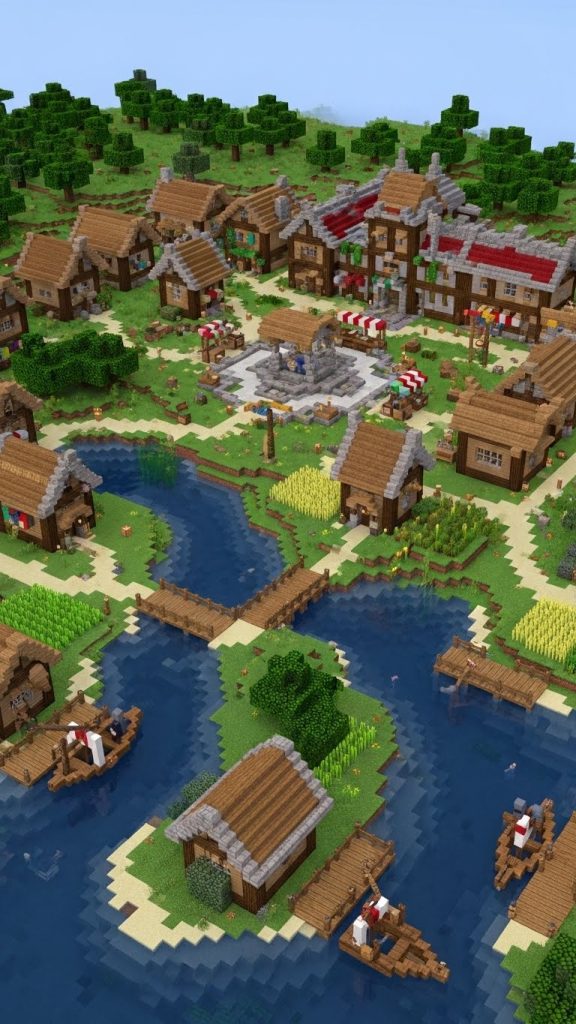
A riverside village is one of the most natural and immersive layouts in Minecraft. Instead of flattening land, this design embraces the curves of the river and places homes where they would realistically exist — close to water, docks, and farmland.
Houses are arranged along winding paths that follow the riverbank. Wooden bridges connect small clusters of homes, while boats rest beside docks made from oak planks and fences. Fishermen huts sit right at the water’s edge, giving the village a working, lived-in feel.
This layout feels peaceful and believable, especially when paired with lanterns reflecting off the water at night. Crops like wheat and sugarcane grow near the river, reinforcing the idea of a self-sustaining settlement.
Why it works:
It feels organic, cozy, and realistic — perfect for survival worlds and scenic screenshots.
2. Medieval Central Plaza Village
This layout is built around a strong central square, inspired by medieval European towns. At the heart of the village is a large open plaza featuring a well, fountain, or market stalls. All major paths lead back to this center, making the village feel organized and alive.
Blacksmiths, libraries, and town halls surround the plaza, while residential houses spread outward in neat rows. Stone paths, banners, and lantern posts add structure and elegance. This design works especially well in plains or flower biomes.
The plaza becomes a natural gathering space — visually striking and easy to navigate.
Why it works:
Highly aesthetic, symmetrical, and perfect for role-play or cinematic builds.

3. Cozy Hillside Terraced Village
Instead of flattening hills, this layout celebrates elevation. Homes are built into hillsides using terraces connected by stone stairs and wooden walkways. Each level has its own small purpose — housing, farms, workshops, or gardens.
This village feels like it evolved naturally over time. Retaining walls made of stone bricks or cobblestone add realism, while flower pots and greenery soften the structure.
From a distance, the village looks layered and detailed, making it incredibly Pinterest-friendly.
Why it works:
Visual depth, realism, and stunning screenshots from every angle.

4. Farming-Focused Rural Village
This layout revolves around agriculture. Instead of placing farms on the outskirts, farmland becomes the heart of the village. Homes are built around fields of wheat, carrots, potatoes, and beetroot.
Small barns, composters, animal pens, and windmill-style builds add charm. Dirt paths cut through crops, and scarecrows or hay bales create visual interest.
This village feels peaceful, simple, and deeply connected to survival gameplay.
Why it works:
Extremely realistic and cozy — perfect for players who love countryside aesthetics.

5. Walled Defensive Village Layout
Inspired by medieval fortresses, this village is surrounded by a stone or wood wall with watchtowers at each corner. The layout inside the walls is compact and efficient, with narrow streets and closely packed buildings.
Key structures like the blacksmith, storage hall, and armory are placed near the center for protection. Lanterns line the walls, and banners give the village identity.
This layout feels strong, safe, and historically inspired.
Why it works:
Great for survival worlds, raids, and dramatic visuals.

6. Forest-Blended Woodland Village
Instead of clearing trees, this village integrates directly into the forest. Houses are built between trees, some partially elevated on stilts, others nestled into clearings.
Paths are made of coarse dirt and mossy blocks, while leaves and vines are left intentionally untouched. Soft lighting from lanterns creates a magical glow at night.
This layout feels like the village grew with nature rather than replacing it.
Why it works:
Enchanting, natural, and perfect for fantasy-inspired builds.

7. Desert Oasis Village Layout
A desert village doesn’t have to feel empty. This layout centers around an oasis — a pool of water surrounded by palm-like trees, farms, and sandstone houses.
Buildings are arranged in compact clusters to conserve space and create shade. Narrow alleys, flat rooftops, and courtyards give the village a warm, realistic feel.
The contrast between dry sand and lush greenery makes this layout visually powerful.
Why it works:
Striking contrast and strong thematic identity.

8. Coastal Fishing Village
Built along the edge of the ocean, this village focuses on fishing and trade. Wooden docks extend into the water, with small boats tied to posts. Homes are built close together, often slightly elevated to avoid waves.
Smoke rises from smokers near the docks, while nets and barrels add realism. Stone paths and sea lanterns enhance the coastal vibe.
At sunset, this village becomes incredibly cinematic.
Why it works:
Perfect for ocean lovers and aesthetic screenshots.

9. Snowy Mountain Village Layout
This layout is all about warmth in a cold environment. Houses are built using spruce wood and stone, with steep roofs to prevent snow buildup.
Buildings are clustered closely together, connected by lantern-lit paths. Smoke from chimneys adds life and motion to the scene.
Despite the harsh biome, the village feels welcoming and safe.
Why it works:
Strong atmosphere and cozy winter aesthetics.

10. Mixed-Era Storytelling Village
This unique layout tells a story through architecture. Older buildings made from cobblestone and wood sit beside newer stone structures, suggesting growth over time.
Paths are uneven, buildings vary in size, and small details like abandoned huts or renovated houses add depth. This village feels truly alive — imperfect, evolving, and realistic.
Why it works:
Excellent for creative builders who love narrative and realism.
