10. The Pumpkin Patch Study
The Pumpkin Patch Study is a seasonal-themed room that celebrates the orange, warm aesthetic of Autumn.
This room should feel like a cozy harvest home. Use orange concrete, terracotta, and wood to build the walls. The “whimsy” comes from the use of carved pumpkins and jack-o’-lanterns as your primary light source. Use hay bales as seating (topped with carpets for comfort). The room should be filled with bookshelves, craft tables, and maps. Incorporate “fallen leaves” by placing carpet or pressure plates on the floor in shades of orange, yellow, and brown. It’s a room that captures the essence of a crisp October day, making it the perfect place to sit and plan your next big mining expedition.
Achieving the “Whimsical” Look: Design Principles
Building the structure is only the beginning. Achieving a truly whimsical interior requires attention to detail.
The Power of Clutter
Minecraft interiors often feel “dead” because they are too empty. Real rooms are full of stuff. To make your Minecraft rooms feel alive, you need clutter. Use item frames to place maps, clocks, compasses, and food on the walls. Use armor stands to display “clothing” (leather armor). Use trapdoors, signs, and slabs to create custom furniture like armchairs, sofas, and desks. A room that looks like it is lived in is a room that feels whimsical.
Lighting as Art
Never rely on just one type of light. A room lit only by torches is a room with no soul. Use a mix of light sources. Lanterns (both hanging and placed) provide a rustic feel. End rods provide a modern, clean light. Glow berries, sea lanterns, and glowstone can be hidden to create “magical” light that doesn’t seem to come from anywhere. Redstone lamps connected to daylight sensors can automatically turn your lighting on and off as the sun sets, adding a layer of automation and realism.
Texture and Depth
Avoid flat walls. If your wall is made of one block, it will look boring. Mix your materials. If you are building a wooden wall, use stripped logs, planks, and stairs to create a pattern. If you are building a stone wall, mix stone bricks, cobblestone, and andesite. Depth creates interest. Use stairs and slabs to create “indentations” in your walls, where you can place bookshelves, plants, or display items.
The Role of Color Palettes
Don’t just use every color in the game. Choose a palette and stick to it. If you are building a “Forest” theme, stick to browns, greens, and grays. If you are building a “Magical” theme, stick to purples, blues, and golds. A restricted color palette makes your room feel cohesive and intentional, which is the hallmark of a good interior designer.
Bringing the Outdoors In
Whimsical builds are almost always connected to nature. Don’t be afraid to bring leaves, vines, and moss inside. Use leaf blocks to create “bushes” in the corners of your room. Use vines to make your walls look like they are being reclaimed by the forest. Use potted flowers on every surface. Nature is the ultimate whimsical element—it’s organic, it grows, and it changes. By inviting nature into your interior, you make your home feel like it is part of the world, not just a box sitting on top of it.
Final Thoughts: Designing Your Sanctuary
The beauty of Minecraft is that there are no rules. You can build a house made of dirt that looks like a castle, or a mansion made of glass that feels like a cozy cottage. The interiors we’ve discussed here are just starting points. The real magic happens when you start experimenting.


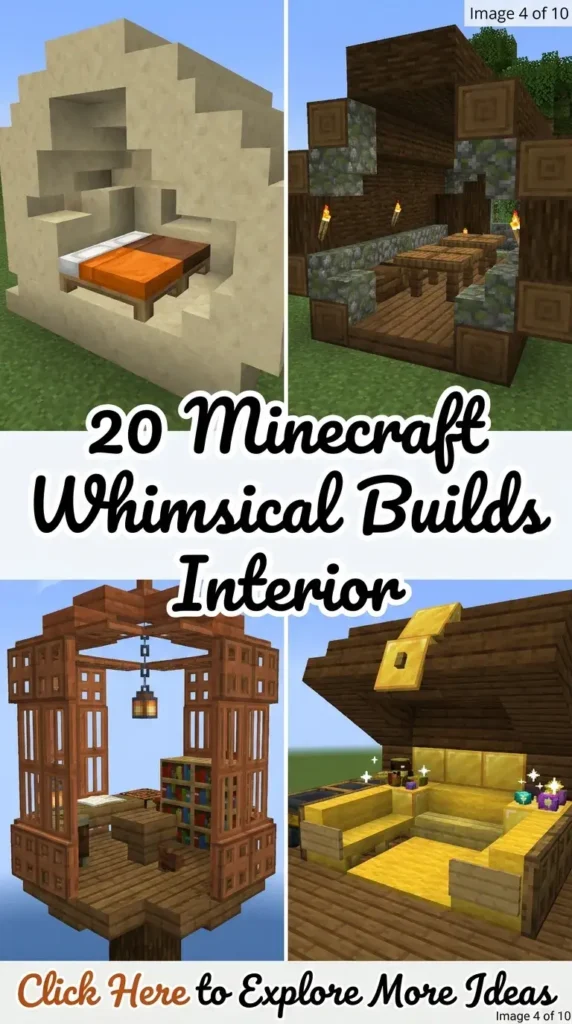

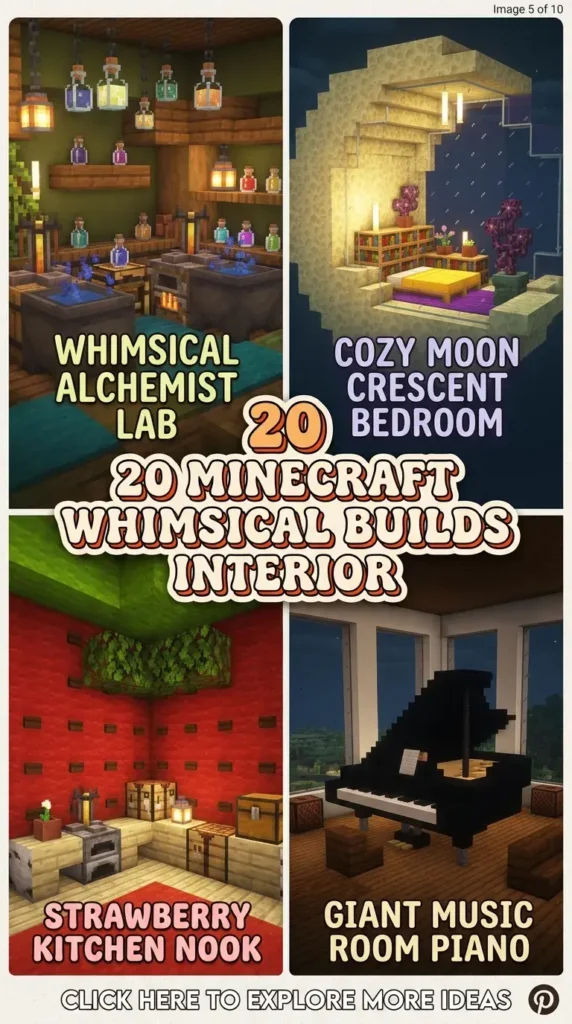
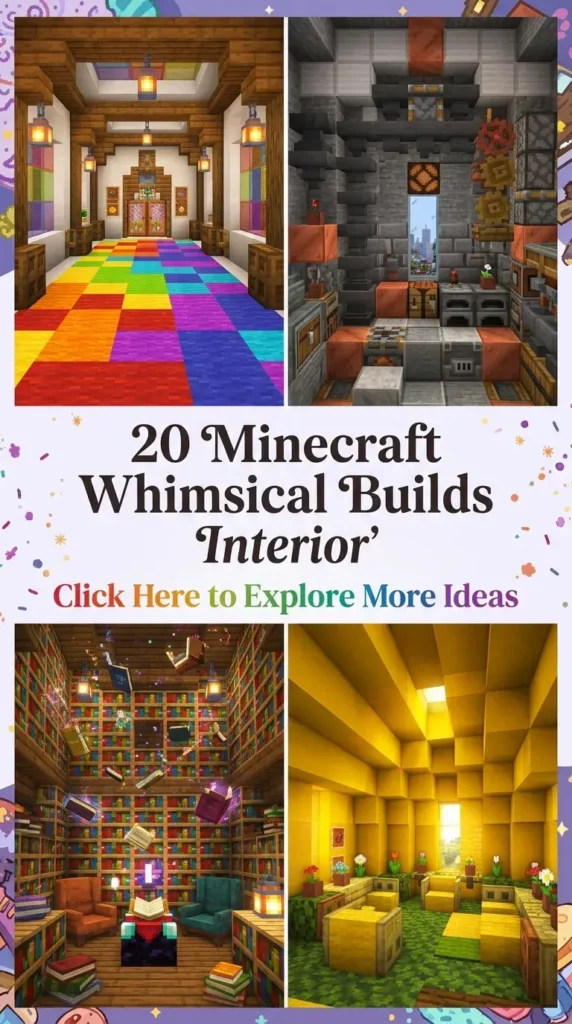
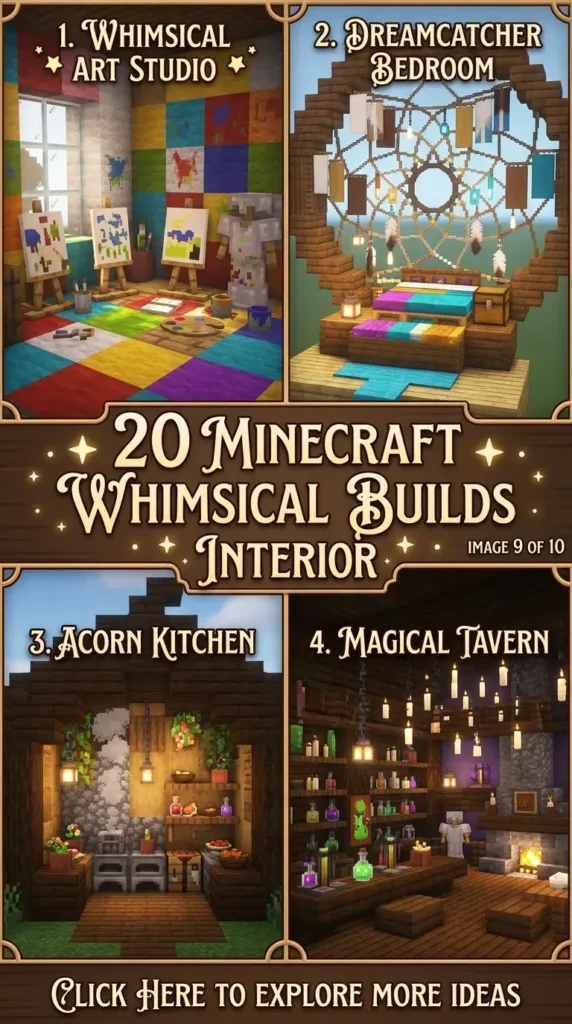
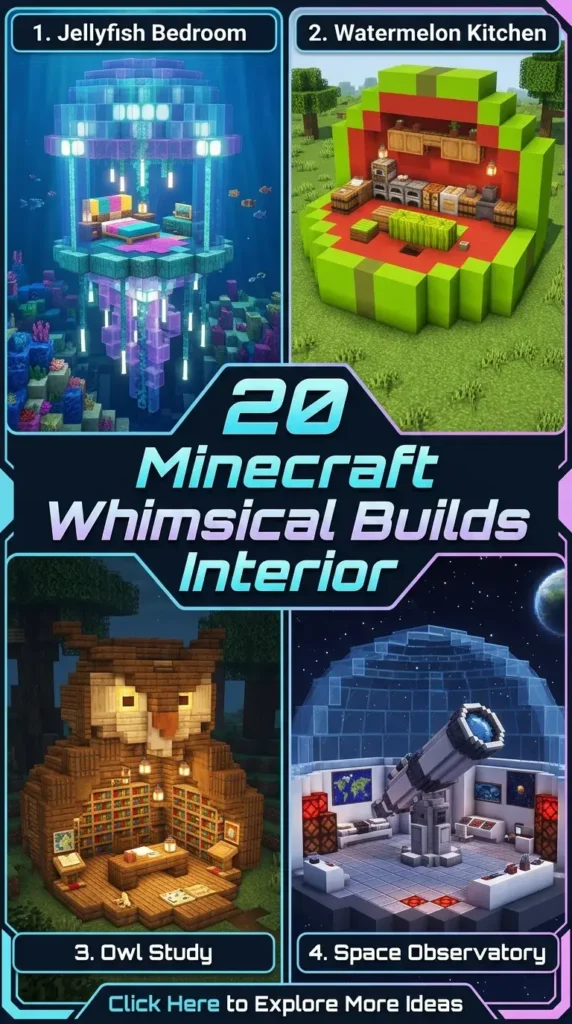
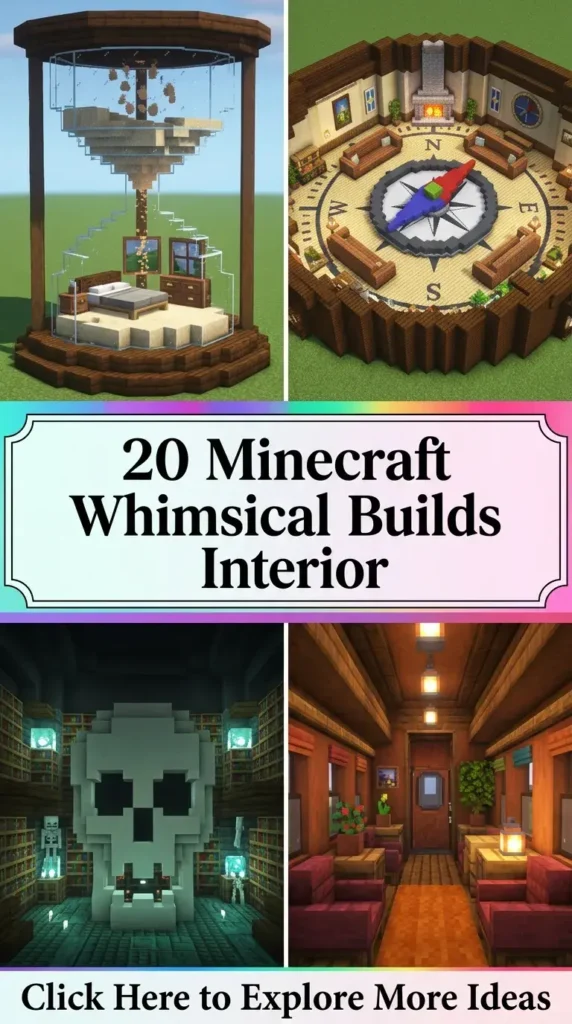
Don’t be afraid to try combinations that seem strange. Swap out blocks, move your furniture, and add that extra bit of clutter. Your Minecraft home is a place where you can be anyone you want to be. It is a place where you can escape the real world, settle into your favorite chair, and look out over the blocky horizon you’ve created.
So, gather your resources. Choose your biome. Start with one room, and then expand. Your whimsical Minecraft sanctuary is waiting to be built.